
Spring Migration: February to May
The spring migration sequence in Poland follows a broadly predictable order, though the precise timing of each species' arrival shifts by one to three weeks depending on the warmth of the preceding winter and conditions on the wintering grounds further south and west.
Early Arrivals: February–March
Common cranes (Grus grus) are among the first large migrants to move through Poland. Cranes wintering in western France and Iberia begin northeast movement in late February; the Vistula and Narew valleys serve as regular stopover points. Concentrations exceeding several thousand individuals have been recorded at riverside meadow sites during mild late-February periods.
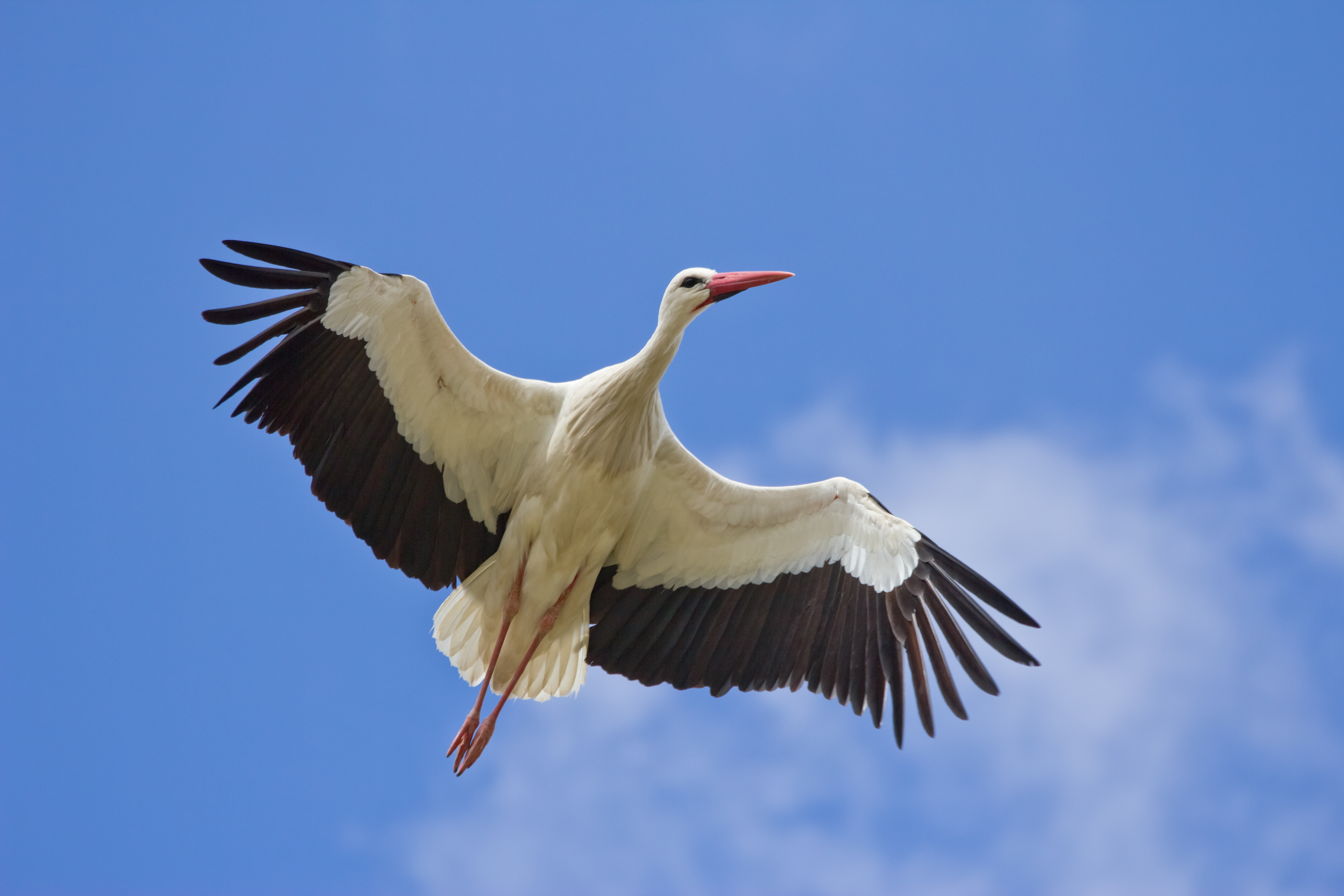
White storks (Ciconia ciconia) arrive from sub-Saharan wintering grounds from mid-March onward in most years. Stork return dates have been systematically recorded by OTOP since the 1980s, and the data indicate a consistent trend toward earlier arrivals compared to records from the mid-twentieth century. Poland holds a substantial proportion of the European white stork population, with the highest densities in the Mazovian and Podlaskie voivodeships.
Peak Spring Passage: April
April represents the most concentrated period of spring migration across Polish wetlands. Marsh harriers (Circus aeruginosus) return and establish territories over reed beds; black-tailed godwits (Limosa limosa) stage on flooded grasslands; garganey (Spatula querquedula) appear on open water.
Wader passage through inland wetlands is most visible during the first two weeks of April. Ruffs (Calidris pugnax), dunlin (Calidris alpina), and little stints appear at exposed mud margins. The Biebrza National Park is particularly well-documented for wader counts during this period, with OTOP maintaining records of peak count dates and species composition.
Late Spring: May
May brings the final wave of long-distance migrants. Aquatic warblers (Acrocephalus paludicola) arrive at Biebrza in early May, where they breed in sedge-dominated fen. This species is classified as Vulnerable on the IUCN Red List, with the Biebrza population representing a significant portion of the global breeding total. Corn crakes (Crex crex) are heard calling from Narew meadows from mid-May.
Autumn Migration: August to November
Autumn migration through Poland is less visually concentrated than spring, as birds disperse more widely and move with less urgency than pre-breeding northward movement. However, several species gather in numbers large enough to be readily observable at specific staging sites.
August–September: Wader Passage
The first southward-moving waders appear at Polish wetlands from late July, with peak passage of most species occurring through August and September. Green sandpipers (Tringa ochropus), wood sandpipers (Tringa glareola), and common sandpipers are consistent at fish ponds and river margins. Little ringed plovers breed at many sites and are joined by passage birds moving from breeding areas further north.
Observation tip: Fish pond drawdown at Milicz and similar sites in Silesia typically begins in late September, exposing mud margins that concentrate feeding waders for several weeks before the water level is restored. The timing of drawdown varies by pond management cycle and is not always predictable from year to year.
October: Goose and Swan Staging
The Warta Mouth National Park becomes the focal point for waterfowl observation in October and November. Geese staging here include bean geese (Anser fabalis), white-fronted geese (Anser albifrons), and smaller numbers of taiga bean geese (Anser fabalis fabalis). The staging flocks use the surrounding agricultural fields for feeding and the flooded meadows for roosting.
Whooper swans (Cygnus cygnus) and Bewick's swans (Cygnus columbianus bewickii) pass through the major river valleys in October, with some individuals remaining at ice-free wetlands through December. The Warta and Vistula lower reaches are documented staging sites for both species.

November: Late Migrants and Winter Arrivals
Raptors continue moving south through November. Rough-legged buzzards (Buteo lagopus) from Scandinavian breeding areas appear over open agricultural land and marsh margins. Hen harriers (Circus cyaneus) establish winter territories over reed beds and upland margins. White-tailed eagles, which breed in Poland, are joined by birds from Baltic populations during this period, making November a consistently productive time for eagle observation at Biebrza.
Winter Observation
Polish winters vary considerably in severity. Mild winters keep most inland wetlands partially ice-free and allow continued observation of wintering waterfowl. Severe cold concentrates birds at unfrozen sections of larger rivers and at geothermal-influenced springs. The lower Vistula near Włocławek, where the reservoir rarely freezes completely, is documented as a regular winter concentration point for diving ducks, mergansers, and white-tailed eagles.
Systematic winter waterbird counts are coordinated in Poland by OTOP as part of the pan-European International Waterbird Census, conducted each January. Publicly available count data from previous years can be accessed through the European Environment Agency biodiversity data portal.
Migration timing data referenced from published OTOP reports and the IUCN Red List. Species Latin names follow current BirdLife International taxonomy. Last reviewed June 2026.